|
||||||||||||||||
 |
||||||||||||||||
Important information     |
|
The agreement on free trade zone in the CIS came into forceSeptember 20, an agreement on free trade zone in the CIS came into force in Ukraine, Belarus and Russia. Within six months after the entry into force of the treaty, the participants will start negotiations on a phased elimination of export duties.
According to the document, the parties will not apply in respect of each other's customs duties and other payments equivalent to them except for those listed in the annexes to the agreement exceptions to free trade for imports.
The structure included duty exemptions for the supply of sugar to Russia, Belarus, Kazakhstan and Moldova: the countries of the Customs Union, it will be 340 dollars / ton (no time limit) for Moldova - 75% of the customs value of 2015. A fee of 50% of the customs value of the supply of sugar to Ukraine Customs Union and Moldova also included in the list of exceptions. Russia retained the export tax on natural gas in 30%, but with the caveat that Ukraine will operate a special formula. Ukraine reserves for itself the export duty on ferro alloys, scrap, and sunflower seeds at the rate fixed in the agreements with the World Trade Organization. The agreement also provides for freedom of transit, but with the caveat that the scope of the provisions governing the transit is not covered transit pipelines.
In addition, the agreement reduces the number of existing agreements (multilateral and bilateral), which guide the CIS states. In addition, the document prescribed dispute resolution process in accordance with the procedures of the WTO, the procedure for solving a number of other issues of mutual interest.
Eventually, after approval of all internal procedures, Armenia, Kazakhstan, Kyrgyzstan, Moldova and Tajikistan will join to the agreement. Treaty shall be open for accession to other countries.
For information:
October 18, 2011 in St. Petersburg after a meeting of the Council of Heads of Governments of CIS countries signed the Agreement on free trade. The contract includes the simplification of the legal framework of trade and economic relations between the signatory countries, the replacement of a number of multilateral and about 100 bilateral agreements governing the free trade regime in the Commonwealth.
28.09.2012
|
|
Crimean regions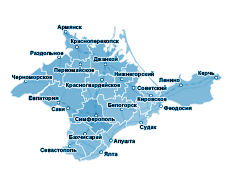
News04.10.12
04.10.12
04.10.12
02.10.12
28.09.12
Useful resources   |
||||||||||||
|
||||||||||||||||





